

Co-hosted by Yale Club of Beijing and Yale Center Beijing. This talk is part of the Greenberg Distinguished Colloquium.
Event Time
October 28, 2025 | Tuesday
8:00 pm-9:00 pm China Standard Time (CST)
October 28, 2025 | Tuesday
8:00 am-9:00 am Eastern Standard Time (EST)
Participation Format

Registration is required to receive the ZOOM link, which will be sent to your registered email address or phone number shortly. Please enter the ZOOM room 15 minutes before the starting time. Once the Zoom room reaches full capacity, latecomers may be unable to join the event.
Registration
Please click “HERE” to register.Please send an email to yalecenterbeijing@yale.edu if there are any problems.
Ticket
Free
LANGUAGE
The language of the event will be English.
The Event
Multiple factors, including the first use of a high-fired white clay, contributed to the vitality of the Chinese ceramic industry from late 6th century to the 12th century. At least partially spurred by imported glass and metalwork, the growing taste for white clay and glazes led to the development of the fabled sancai (“three-color”) wares of the 7th and 8th centuries. White was the third color added to the repertoire of Chinese glazes: green and amber glazes had been used as early as the Han dynasty.
Moreover, by the 9th and 10th centuries, knowledge of Chinese white wares—traded and given as diplomatic gifts as far west as Egypt and as far east as Japan—had begun to transform the ceramic traditions of West Asia and the Eastern Mediterranean. In particular, the development of an opaque tin-glaze in Iraq, and its spread throughout West Asia, spurred the creation of European majolica, a tradition first crafted in Spain and soon thereafter in Italy.
On October 28, Denise Leidy, the Ruth and Bruce Dayton Curator of Asian Art at the Yale University Art Gallery, will share her insights into why white clay emerged in China in the late 6th century and how this inflects with the development of sancai glazes during the Tang dynasty.

The Speaker
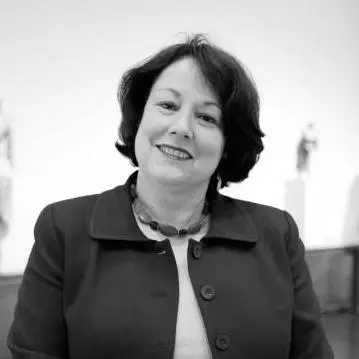
Denise Leidy
Ruth and Bruce Dayton Curator of Asian Art, Yale University Art Gallery
Denise Leidy currently serves as the Ruth and Bruce Dayton Curator of Asian Art at the Yale University Art Gallery. Prior to joining Yale, Leidy also served as the Brooke Russell Astor Curator of Chinese Art (emerita) at the Metropolitan Museum of Art, as well as in curatorial positions at The Asia Society New York and the Museum of Fine Arts, Boston. She is endlessly fascinated by the development and movement of technologies, ideas, and images within and between Asian cultures, and between these centers and those in Africa, Europe, and the Americas. In addition to curating exhibitions, she has published and lectured widely, exploring topics in Buddhist art, Chinese and other Asian ceramics, and East Asian lacquer. Her publications include Buddhist Art: Its History and Meaning, Mother-of- Pearl: A Tradition in Asian Lacquer, Wisdom Embodied: Chinese Buddhist and Daoist Sculpture in the Metropolitan Museum of Art, How to Read Chinese Ceramics, and the recently released Celadon on the Seas: Chinese Ceramics, 9th – 14th Century.
Greenberg Distinguished Colloquium

Thanks to the generosity of Mr. Maurice R. Greenberg, Chairman and CEO of Starr Insurance Companies, and a member of Yale Center Beijing’s Advisory Committee, Yale Center Beijing is pleased to host the Greenberg Distinguished Colloquium, which convenes thought leaders from all sectors who, in the spirit of Mr. Greenberg, play pivotal roles in building bridges among China, the U.S., and the rest of the world.
Public Event